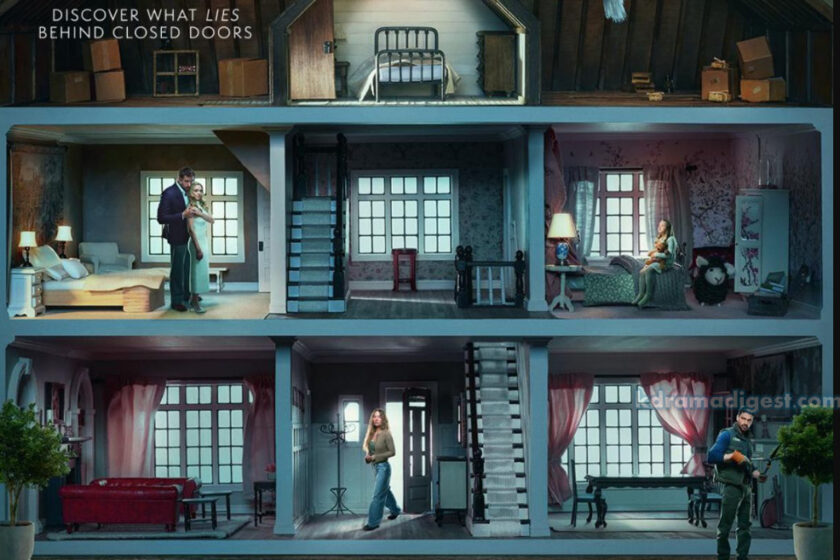
Early in the year often brings films that quietly grow into long conversations, and The Housemaid is one of those titles. At first glance, it may seem like just another psychological thriller, but as viewers spend more time with the story, it becomes clear that the film is designed to linger rather than shock.
Unlike many thrillers that rely on fast pacing or loud moments to grab attention, The Housemaid takes a more restrained approach. Its tension is subtle, built slowly through atmosphere, character behavior, and carefully placed details. The film invites viewers to observe rather than react immediately, creating an experience that feels controlled, deliberate, and quietly unsettling.
This slow-burn quality is precisely what has made The Housemaid a frequent topic of discussion. Audiences are not simply talking about what happens in the film, but how it makes them feel while watching, and even after it ends.
From its opening moments, The Housemaid establishes a calm and measured rhythm. The narrative does not rush to explain itself, nor does it overwhelm the audience with exposition. Instead, the film allows scenes to breathe, letting silences, pauses, and small gestures carry much of the emotional weight.
At times, the story may appear deceptively simple. Situations unfold in a way that feels almost ordinary, yet there is an underlying tension that never fully disappears. The film seems aware that discomfort does not always come from dramatic events, but from subtle inconsistencies and unspoken thoughts.
This pacing may not appeal to viewers expecting immediate thrills, but for those familiar with psychological storytelling, it is an intentional choice. The gradual build encourages closer attention, making viewers more aware of details that might otherwise go unnoticed.
One of the key reasons The Housemaid attracted attention even before its release is its literary origin. The film is adapted from a bestselling psychological thriller novel by Freida McFadden, a writer known for constructing narratives filled with tension, misdirection, and unexpected turns.
The novel gained widespread popularity thanks to its gripping structure and ability to keep readers questioning what they think they know. Its success eventually led to the creation of a series, further expanding the story’s universe while maintaining its central themes of psychological conflict and hidden motives.
In adapting the novel for the screen, The Housemaid aims to preserve the core strengths of the original story. Rather than simplifying the narrative, the film leans into its layered structure, allowing the psychological tension to translate visually. Fans of the book will recognize familiar emotional beats, while new viewers are introduced to a story that rewards patience and attention.
Adapting a novel into a film often requires difficult choices, particularly when the source material relies heavily on internal monologues and psychological tension. The Housemaid approaches this challenge by focusing on atmosphere and performance rather than overt explanation.
Instead of explicitly stating a character’s thoughts, the film often suggests them through framing, pacing, and subtle visual cues. This approach respects the intelligence of the audience and mirrors the experience of reading the novel, where much of the tension comes from what is implied rather than stated outright.
By maintaining this balance, the film manages to feel faithful to its source without becoming overly literal. It transforms internal conflict into observable behavior, allowing viewers to interpret the story actively rather than passively receiving information.
Another aspect that has fueled discussion around The Housemaid is its director. Paul Feig is widely recognized for his work in comedy and mainstream entertainment, making his involvement in a psychological thriller particularly noteworthy.
With The Housemaid, Feig steps away from humor-driven storytelling and embraces a darker, more restrained tone. His direction emphasizes control and precision, ensuring that the film never feels chaotic or rushed. Each scene is constructed with purpose, contributing to the overall sense of unease that defines the film.
Rather than relying on conventional horror techniques, Feig allows tension to emerge naturally. This approach aligns well with the film’s narrative goals, reinforcing its identity as a psychological thriller rather than a conventional suspense film.
One of the film’s most distinctive qualities is its refusal to depend on excessive jump scares or sudden dramatic moments. Instead, The Housemaid builds tension through repetition, anticipation, and the gradual accumulation of unease.
Scenes are allowed to linger slightly longer than expected. Conversations feel weighted with unspoken meaning. Small actions take on disproportionate significance. These choices create a sense of discomfort that feels persistent rather than fleeting.
This method of tension-building aligns with the psychological nature of the story. The fear does not come from external threats, but from uncertainty and doubt. Viewers are encouraged to question motivations, relationships, and appearances, all of which contribute to the film’s lasting impact.

At the heart of The Housemaid are its performances, particularly those of Amanda Seyfried and Sydney Sweeney. Their portrayals anchor the film’s emotional and psychological complexity, making the story feel grounded and believable.
Amanda Seyfried’s character, Nina, carries a quiet intensity that gradually reveals itself over time. Her performance relies heavily on subtle shifts in tone and expression, allowing the character’s inner conflict to surface without overt dramatization.
Sydney Sweeney, as Millie, provides a contrasting presence that complements Seyfried’s performance. Her portrayal adds another layer of ambiguity, making the dynamic between the two characters central to the film’s tension.
The interaction between Seyfried and Sweeney is not defined by overt conflict, but by restraint and suggestion. Their scenes together are often marked by pauses, glances, and understated reactions, all of which contribute to the film’s psychological atmosphere.
This balance prevents the story from becoming predictable. Neither character is presented as entirely transparent, encouraging viewers to remain observant and engaged. The uncertainty surrounding their relationship becomes one of the film’s most compelling elements.
Through their performances, the film maintains a sense of emotional realism that supports its broader themes. The tension feels earned, not forced, and develops organically over time.
One of the most discussed aspects of The Housemaid is its attention to detail. Throughout the film, small moments and seemingly insignificant choices are carefully placed, often without drawing attention to themselves.
These details may appear inconsequential during a first viewing, but they gain importance as the story progresses. The film trusts its audience to remember and reassess these moments, reinforcing its slow-burn structure.
This emphasis on detail enhances the film’s rewatch value. Viewers often find themselves reconsidering earlier scenes in light of later developments, realizing that the story has been quietly guiding them all along.
As expected from a psychological thriller, The Housemaid culminates in a significant plot twist. Rather than serving as a simple surprise, this moment functions as a recontextualization of the entire narrative.
The twist encourages viewers to reinterpret earlier events, transforming previously neutral moments into meaningful clues. This shift in perspective is a defining feature of the film and one of the main reasons it continues to generate discussion.
Importantly, the twist does not feel disconnected from the rest of the story. It emerges naturally from the established narrative, reinforcing the idea that the film has been carefully structured from the beginning.
The ending of The Housemaid is not designed to provide easy answers. Instead, it leaves viewers with a lingering sense of reflection, prompting them to reconsider the characters and their motivations.
This open-ended quality aligns with the film’s overall tone. Rather than offering closure through explanation, it invites interpretation. Viewers are encouraged to form their own conclusions, which contributes to the film’s lasting impression.
Such an ending is particularly effective for a psychological thriller, as it extends the experience beyond the screen. The story does not end when the credits roll; it continues in conversation and thought.
Currently showing in theaters, The Housemaid has received positive responses, especially from audiences familiar with the original novel. Many have noted the film’s commitment to its source material while appreciating the added depth provided by strong performances and atmospheric direction.
For viewers who enjoy thrillers that prioritize mood, character, and psychological tension over spectacle, The Housemaid offers a rewarding experience. Its deliberate pacing and attention to detail may not appeal to everyone, but for the right audience, these qualities are precisely what make it compelling.
The Housemaid stands out not because it reinvents the psychological thriller genre, but because it executes its core elements with confidence and restraint. Through a faithful adaptation, controlled direction, strong performances, and a carefully constructed narrative, the film creates an experience that is both unsettling and memorable.
It is a reminder that tension does not always need to be loud to be effective. Sometimes, the most powerful thrillers are those that speak quietly, and trust the audience to listen.